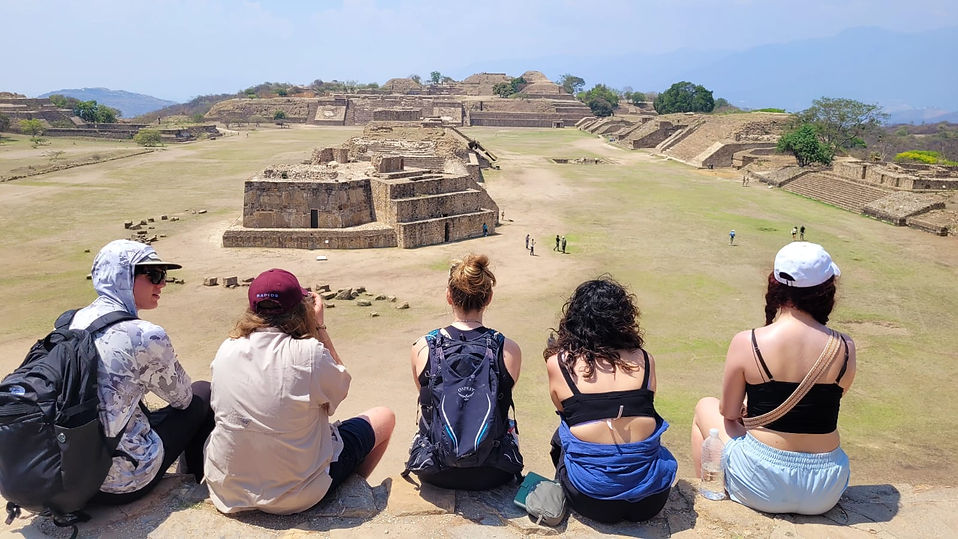
Global Seminar - From Cloud People to the Land of the Sky: The Archaeology of Oaxaca
This was the highlight of my teaching career so far. I can't express how much fun I had leading a dozen CU undergraduates around the place that I often call my second home: Oaxaca.

Seminar Highlights
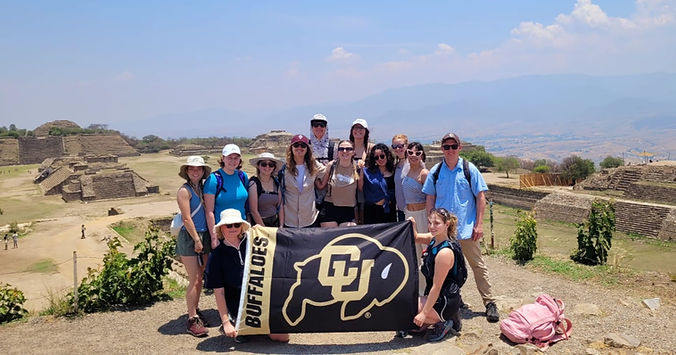
Monte Albán
Touring Monte Albán as a student is transformative—it’s history class brought to life on a mountaintop. Standing among the monumental plazas, temples, and carved stones, you can physically trace the ingenuity of the Zapotec civilization. The sweeping views over the Oaxaca Valley reveal why this was a center of power and culture for over a thousand years. Walking the same paths as ancient residents turns abstract timelines into tangible reality. Every structure tells a story about politics, religion, and daily life. It’s an immersive encounter with archaeology, inspiring curiosity, critical thinking, and a deeper appreciation for Mexico’s cultural heritage.
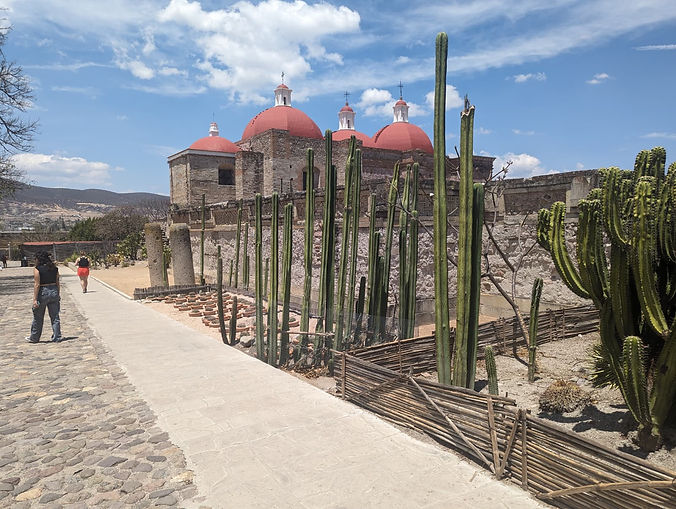
Mitla
Visiting Mitla as a student is an unforgettable encounter with artistry and cultural depth. Known as the “Place of the Dead,” its intricate geometric mosaics—crafted without mortar—showcase Zapotec and Mixtec mastery in stonework and symbolism. Unlike many ancient sites, Mitla’s architecture reflects a fusion of sacred and secular life, with palaces and ceremonial spaces interwoven. Exploring its precise patterns and painted walls offers insight into belief systems, social hierarchy, and resilience under colonial change. Being there transforms textbook descriptions into vivid, tactile experiences, fostering a lasting appreciation for Indigenous innovation and the enduring legacy of Oaxaca’s prehispanic civilizations.
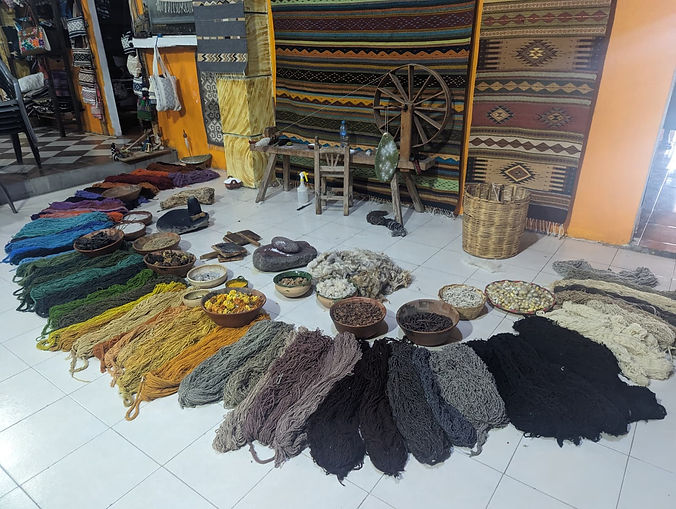
Teotitlán del Valle
Touring a textile workshop in Teotitlán del Valle immerses students in living tradition. Watching artisans card, spin, and dye wool with natural pigments—like cochineal reds and indigo blues—connects modern visitors to centuries-old Zapotec techniques. The rhythmic clack of the loom, the scent of dyed fibers, and the vibrant patterns taking shape reveal how art, identity, and livelihood intertwine. It’s more than a craft demonstration; it’s a lesson in sustainability, cultural resilience, and the storytelling woven into each rug. Experiencing these processes firsthand fosters respect for Indigenous knowledge systems and deepens understanding of Oaxaca’s ongoing artistic and cultural heritage.
Tututepec
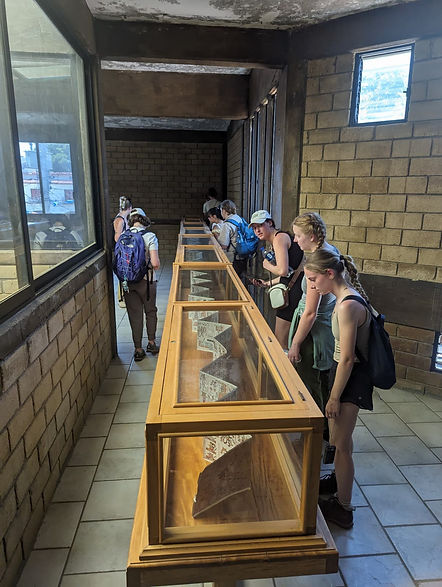
Visiting the Tututepec Museum offers students a rare glimpse into the heart of the Mixtec coastal kingdom. Located on the site of this once-powerful capital, the museum’s artifacts—ceramics, codex fragments, and everyday tools—bring to life the political and cultural influence Tututepec wielded across Oaxaca’s Pacific coast. Exhibits trace the city’s role in trade, warfare, and governance, while local guides share oral histories that connect past and present. Touring the museum transforms abstract historical narratives into a vivid, place-based experience, fostering a deeper appreciation for Mixtec achievements and their enduring legacy in the cultural tapestry of Oaxaca.
The Río Verde Project
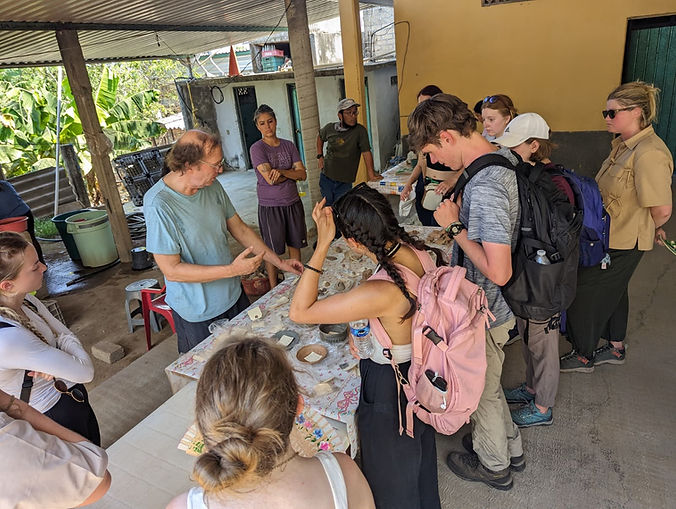
Visiting the Río Verde Archaeological Project’s field house and nearby sites like Cerro de la Virgen and Río Viejo gives students a front-row seat to the process of discovery. At the field house, they see artifacts mid-analysis, maps in progress, and the daily rhythm of archaeological research. Standing atop Cerro de la Virgen reveals sweeping views of the valley and its ancient strategic importance, while exploring Río Viejo’s plazas and mounds offers a tangible sense of community life and political power. This hands-on experience bridges academic study with lived practice, inspiring curiosity and a deeper connection to Oaxaca’s ancient past.